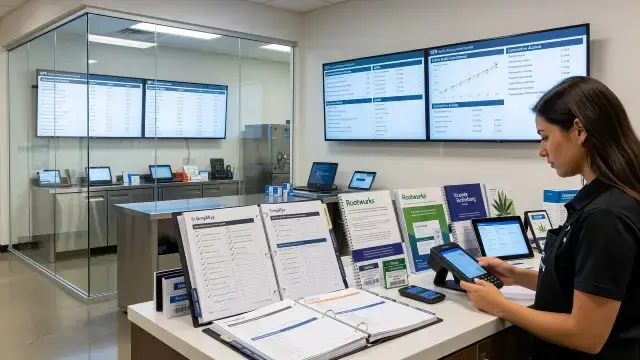
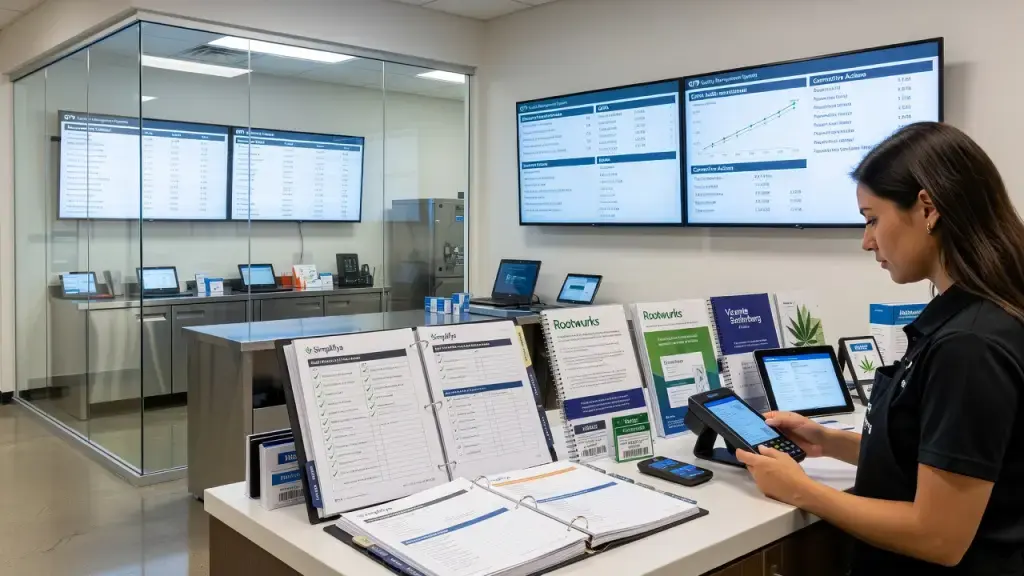
An inspection doesn't care how clean your sales floor looks. It cares whether you can produce the paperwork - the SOP binder, the training logs, the last self-audit - on demand. A separate category of software has grown up around that exact need, distinct from the seed-to-sale platforms that track plants and packages. This is the software that proves an operator is following the rules, not the software that moves inventory.
Self-Audits, SOPs and the Paper Trail Regulators Actually Want
Simplifya, based in Lakewood, Colorado, builds its product around that gap: self-audits, SOP management and license tracking across the states it covers, so an operator can run its own inspection before a regulator does. Rootwurks, out of Austin, pairs training courses with checklists and assessments developed alongside the cannabis law firm Vicente Sederberg - a detail that matters, because training content written by people who argue these cases in front of regulators tends to anticipate the questions an inspector will actually ask. Fair enough, a binder full of SOPs won't stop a violation from happening. But it's often the difference between a warning and a suspended license when something does go wrong, because regulators weigh whether a business had reasonable controls in place.
Quality Management for Manufacturers, and the Counter-Level Checks Retail Needs
Further up the supply chain, cannabis manufacturers face something closer to food-and-drug-style quality obligations: document control, corrective and preventive action (CAPA), batch audits, training records. QT9 sells a quality management system built for that layer of the business, which matters more as states push manufactured and infused products through tighter production standards. At the counter, the compliance problem looks different - it's about the individual sale. ID scanning tools like Patronscan flag repeat visits so budtenders can enforce daily purchase limits, a requirement in most adult-use and medical markets meant to curb over-purchasing and resale. Age verification and purchase-limit enforcement aren't optional niceties; they're the consumer-protection backbone that keeps a dispensary's license intact. Metrc, the track-and-trace system used by states that contract with it, still shows up here too, since compliance teams need it alongside audit and training tools even though inventory tracking itself now lives elsewhere.
Why Banks Need Their Own Compliance Stack
Cannabis remains federally illegal, which means a bank or credit union that takes on a dispensary account is taking on real regulatory exposure - and the only way to manage that exposure is documentation. Green Check in Bonita Springs, Florida, Shield Compliance in Seattle, and RiskScout all sell banks and credit unions onboarding, monitoring and reporting tools built specifically for cannabis accounts. CRB Monitor, based in Nashville, maintains a database of cannabis licenses and beneficial owners that banks use for know-your-customer checks. An operator may never log into one of these platforms directly, but it will meet one anyway - through the paperwork its bank asks for when the account opens, and periodically after.
What This Split Means for Operators
The practical implication: a multi-state operator now needs two different compliance postures, not one. Inventory and track-and-trace reporting handle the product side - what moved, where, and when. This separate layer handles the operational side - whether staff were trained, whether SOPs were followed, whether a sale respected a purchase limit, whether the bank can defend the relationship to its own examiners. Treating these as the same problem is a common mistake, and an expensive one when an inspector or an auditor asks for records a dispensary didn't know it needed to keep.