Maryland and Virginia dispensaries are chasing customers with wholesale discounting and tighter margins. Washington, D.C. operators are taking a different route entirely: building out licensed consumption lounges that let registered patients buy medical cannabis and use it on the premises, something no neighboring jurisdiction currently permits. That regulatory gap is turning into a business strategy, and it's reshaping how local dispensary operators think about retail space, revenue, and customer loyalty.
Why on-site consumption is a D.C.-only advantage
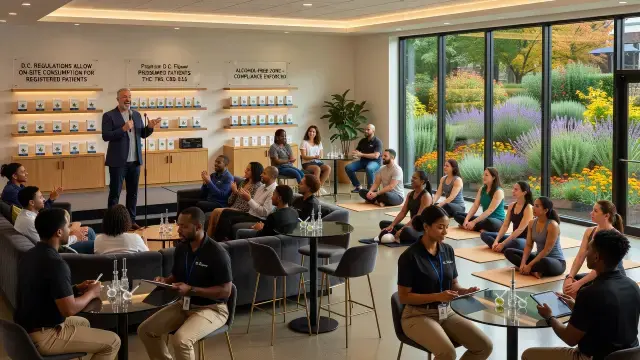
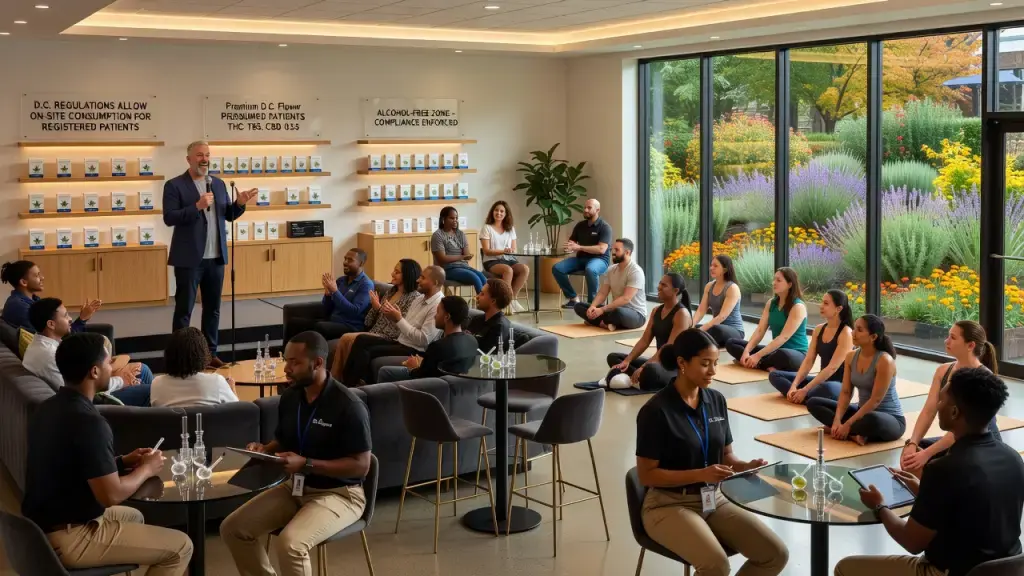
Maryland and Virginia restrict cannabis sales to off-site, take-it-home transactions. D.C.'s medical program, by contrast, allows licensed dispensaries to host consumption on location under city rules - a distinction that's proven difficult for regulators elsewhere to replicate quickly, given how consumption-lounge policy tends to raise separate questions around liquor licensing, public health codes, and zoning. For D.C. operators, many of whom built their customer base during the city's unregulated gray-market "gifting" era before formal licensing took hold, the lounge model is a way to differentiate on experience rather than undercut Maryland and Virginia on price. Comedy nights, yoga sessions, glass rentals, and seasonal gardens aren't just marketing flourishes; they're an attempt to build repeat foot traffic in a market where dispensary density and consumer choice are rising fast.
That said, the model carries real operational weight. Alcohol-free event programming, age verification at entry, and strict adherence to on-site consumption limits all require staff training and documentation that a standard retail counter doesn't. Operators need compliance logs showing who entered, what was verified, and how the space is being monitored - not dissimilar to how bars track service, minus the alcohol regulatory framework to lean on as precedent.
Regional zoning moves signal what's coming for Virginia retail
Henrico County's draft cannabis zoning rules - the first in the Richmond region ahead of Virginia's planned adult-use retail launch - offer a preview of how local governments may try to shape where and how dispensaries operate once state licensing opens up. The county's proposed 1,000-foot buffer around schools, daycares, hospitals, parks, and religious institutions goes beyond Virginia's statewide minimums, a pattern common in early-stage cannabis markets where counties use zoning to manage community concerns before the first licensed store opens its doors.
For prospective Virginia retail operators, this matters for site selection and real estate planning well before applications open. A buffer requirement that exceeds state law can eliminate otherwise viable commercial corridors, and operators who've already signed leases in anticipation of the 2027 launch should recheck those parcels against county-level draft maps rather than relying solely on state guidance. The requirement for county-approved security and crime-prevention plans also adds another compliance layer - one that will likely vary by jurisdiction as other Virginia counties draft their own rules, creating a patchwork operators will need to track closely.
Inventory accuracy gets a formal fix in Maryland
Maryland's pilot program on inventory discrepancy reporting addresses a persistent pain point in dispensary operations: seed-to-sale tracking doesn't eliminate shrinkage, it just makes it visible. Under COMAR 14.17.12.10A, any discrepancy exceeding 0.5% within a product category triggers a mandatory investigation - a threshold tight enough that even minor budroom miscounts or POS entry errors can trip it. The MCA's move to standardize reporting tools suggests the agency has seen enough inconsistency across licensees to justify a uniform process, which should reduce ambiguity for compliance teams currently interpreting the rule differently store to store.
The timing also lands alongside a Baltimore Sun investigation finding unlicensed Baltimore smoke shops selling edibles exceeding state THC limits - a reminder that the compliance burden licensed operators carry exists precisely because unlicensed retailers don't carry it at all. Tight inventory controls and lab-tested, compliant packaging are the cost of legitimacy in a regulated market; they're also the reason licensed dispensaries can credibly claim a consumer-safety advantage that unlicensed shops can't match.
- D.C.: on-site consumption permitted only at licensed medical dispensaries under city regulation
- Virginia: Henrico County draft rules impose 1,000-foot buffers beyond state minimums, ahead of July 2027 adult-use launch
- Maryland: new pilot standardizes discrepancy investigations triggered at a 0.5% inventory variance threshold
Three jurisdictions, three different regulatory pressure points - but the common thread is clear. As the DMV cannabis market matures, operators are competing less on whether they can sell legally and more on how precisely they can manage compliance, space, and customer experience within rules that remain, by design, still being written.