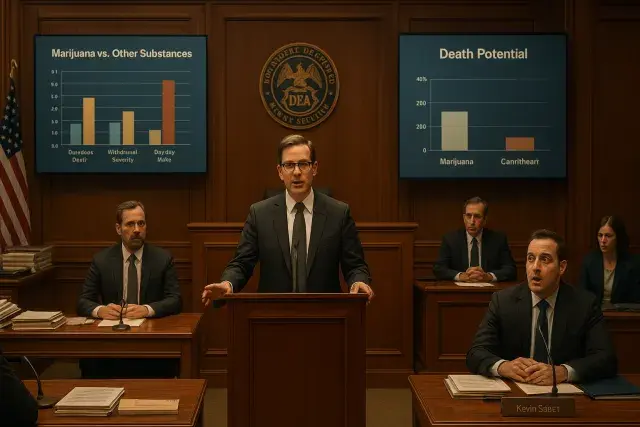
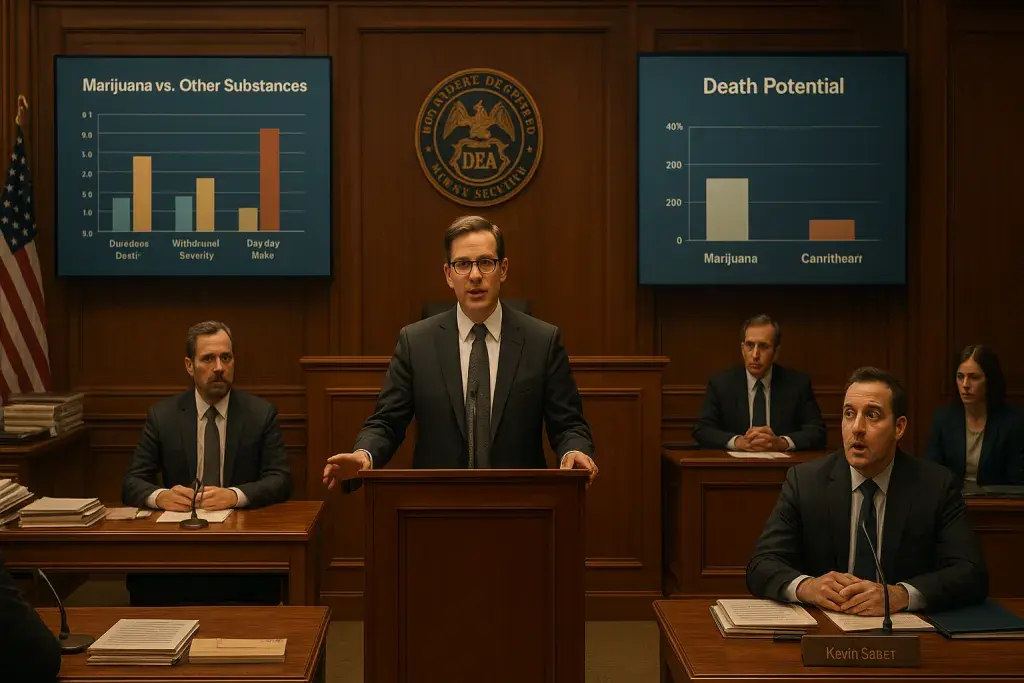
Federal attorneys arguing on behalf of the Trump administration's cannabis rescheduling proposal opened a formal DEA hearing on June 29 by presenting testimony that marijuana carries fewer overdose risks than alcohol, opioids, and other controlled substances-framing the proceeding not as a debate over legalization, but as a regulatory determination about relative harm and medical benefit. The hearing, which is set to conclude no later than July 15, represents the most consequential federal administrative proceeding on cannabis scheduling in decades. What happens inside that hearing room will shape regulatory and compliance conditions for every licensed cannabis business operating today.
For dispensary operators tracking these developments, the underlying legal and regulatory machinery matters as much as the headlines. State-licensed medical cannabis was already reclassified to Schedule III under an April order from Acting Attorney General Todd Blanche-a move that has produced immediate, tangible effects across licensing, taxation, firearms purchasing forms, and DEA registration processes. Platforms built to serve multi-state cannabis retail compliance, such as their platform operating in Oregon's regulated market, are now tracking a federal environment that is shifting in ways that touch inventory management, tax filing strategy, and banking access simultaneously. The 280E tax provision-long one of the most punishing cost burdens on licensed cannabis businesses-does not apply to Schedule III substances, and the IRS has confirmed it plans to issue new guidance following rescheduling. That single change in tax treatment could meaningfully alter the unit economics of dispensary operations.
What the Government Actually Argued on Day One
DEA lawyer James J. Schwartz opened the government's case by stating plainly that this hearing is "not about recreational use of marijuana" and is about "regulation, not legalization." That framing is deliberate-and operationally significant. The government's position acknowledges that cannabis carries risk, but frames the scheduling question around a comparative analysis: how do cannabis's harms and benefits stack up against other controlled substances?
The FDA's Dominic Chiapperino, one of two government witnesses, testified that federal health officials compared marijuana to alcohol, opioids, and other substances when building their scheduling recommendation. On nearly every comparator measure-overdose death potential, withdrawal severity, day-to-day harm-cannabis scored lower. Specifically, Chiapperino said overdose deaths involving marijuana are typically linked to secondary events like accidents rather than direct toxicity, and that cannabis withdrawal symptoms resemble those of tobacco rather than alcohol, which can produce seizures and death in severe cases. Cannabis's overdose death potential was described as "much lower" than Schedule I drugs and Schedule II opioids alike.
The government's second witness, Dr. Corey Burchman, a physician from New Hampshire, is expected to testify about real-world pain management outcomes-specifically how patients have been transitioned from opioids to cannabis, and the comparative withdrawal and overdose profiles he has observed in clinical practice. That's clinical testimony, not policy rhetoric, and it carries a different kind of weight in an administrative record.
Opposition Pushes Back-But Faces an Unusual Adversary
Kevin Sabet, president and CEO of Smart Approaches to Marijuana-one of the anti-rescheduling parties invited to cross-examine government witnesses-described the proceedings as "surreal," arguing that the DEA is now "arguing the opposite of what it's been arguing for the last 50 years." That observation is accurate as a historical matter. The DEA has resisted every prior rescheduling petition for cannabis, and seeing the agency's lawyers construct an affirmative case for moving marijuana to Schedule III is, objectively, a structural reversal.
Here's the catch, though: that reversal doesn't resolve the legal disputes surrounding the process. Multiple lawsuits challenging the rescheduling have been filed by state attorneys general, legalization opponents, and at least one cannabis-focused biopharmaceutical firm-and those cases have been consolidated in federal court. A prior hearing process initiated under the Biden administration collapsed amid litigation over witness selection and alleged improper communications. This administration's process faces similar scrutiny, including criticism that DEA Administrator Terrance Cole invited only rescheduling opponents as formal hearing participants, while reform advocates were told they don't qualify as "adversely affected" parties under the relevant legal standard.
Business Implications Already in Motion
Whatever the hearing ultimately produces, the effects of Blanche's April order are already running through the industry's compliance infrastructure. The ATF has revised its firearm purchase form to acknowledge that medical cannabis use is no longer federally prohibited under Schedule III, removing prior language that treated all cannabis as a disqualifying substance. The DEA has opened a registration pathway for state-licensed cannabis businesses to access federal benefits tied to rescheduling. The Congressional Research Service confirmed that certified medical patients possessing cannabis from licensed dispensaries now carry certain Schedule III protections.
There are real limits, too. The Department of Transportation has been explicit that a Schedule III classification does not excuse positive drug tests for safety-sensitive workers-truck drivers, pilots, and others operating under federal transportation regulations remain subject to existing drug testing requirements regardless of state medical status. That tension between federal rescheduling and sector-specific enforcement rules is the kind of compliance gap that operators in delivery, logistics, and multi-site retail need to document carefully.
A congressional committee has voted to block further rescheduling steps, though bipartisan lawmakers have expressed doubt that the provision will survive into law. The hearing runs through July 15. The outcome of the administrative record built in these proceedings-testimony, cross-examination, evidentiary filings-will form the legal foundation for any final rescheduling rule. For licensed cannabis businesses, that record is worth following closely. The regulatory ground is moving.