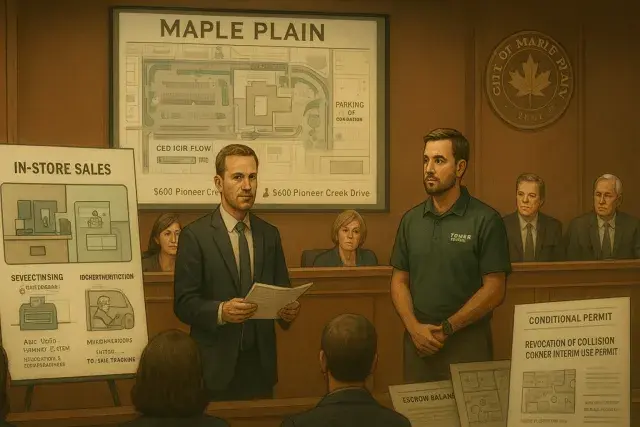
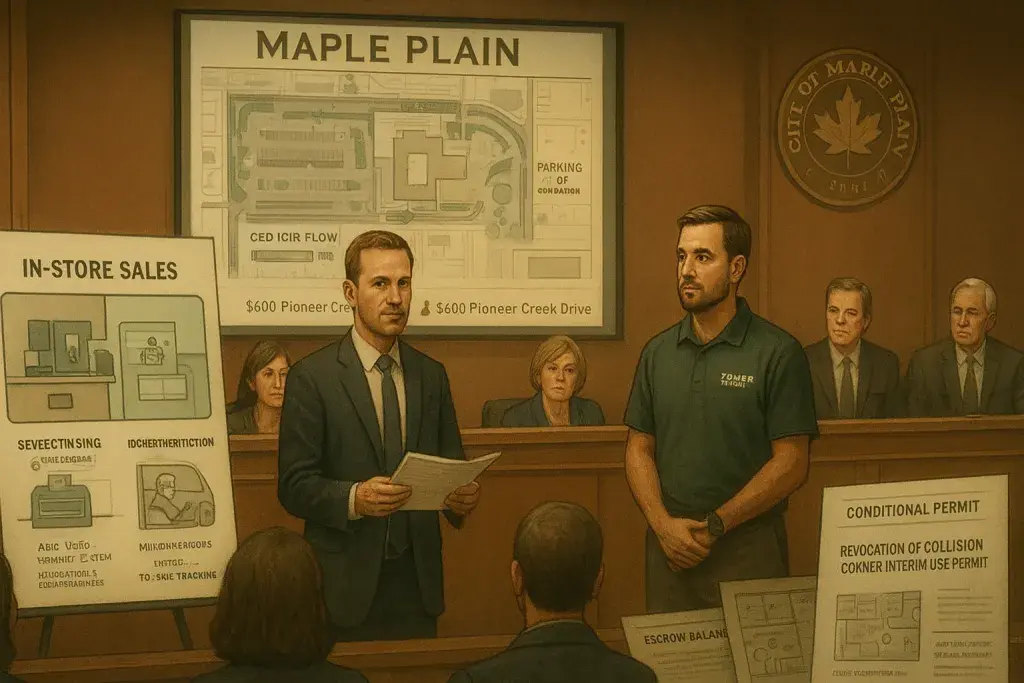
A small Minneapolis-area suburb just opened its doors to licensed cannabis retail. The Maple Plain City Council voted 5-0 on June 22 to grant final approval for cannabis sales - both medical and adult-use - within city limits, following an application from Justin Seurer and Zomer Farms, LLC, for a retail endorsement at 5600 Pioneer Creek Drive. For operators watching Minnesota's regulated market take shape at the municipal level, the Maple Plain decision offers a textbook example of how local zoning, parking compliance, and operational format questions get resolved before a single product hits the shelf.
The approval didn't come without scrutiny. The Planning Commission spent considerable time on two operational specifics: traffic flow at the Pioneer Creek Drive site, and whether the business would launch with in-store sales or limit itself initially to delivery and curbside pickup. That distinction matters more than it might appear. A dispensary operating in delivery-only or curbside mode faces a different compliance posture - delivery manifests, driver verification protocols, and order management workflows - than one running a full budroom with walk-in traffic. As states across the country continue to build out their adult-use frameworks, operators evaluating multi-format retail strategies have increasingly looked at how purpose-built tools, including a dispensary pos system Rhode Island operators and others in regulated states rely on, handle the operational split between in-store POS transactions and delivery order management under a single license. Maple Plain's permit does allow direct in-store purchasing - but only once the operator meets all applicable city ordinances, with sufficient parking being the threshold condition.
That parking requirement is not a formality. Under Minnesota's cannabis licensing framework, municipalities retain authority to layer local conditions on top of state licensing, and those conditions are enforceable. A retail endorsement that is technically issued but operationally restricted to curbside because the parking calculation hasn't cleared is still, in practice, a limited license. Zomer Farms will need to satisfy the city's standards before a full in-store operation is viable. The clock starts now on that compliance work.
What the Zoning Approval Actually Means for the Operator
Securing a retail endorsement at the municipal level is a prerequisite, not a finish line. Operators in Minnesota still need to coordinate with the Office of Cannabis Management, meet state-mandated product testing and compliant packaging requirements, and build out the operational infrastructure - seed-to-sale tracking, age verification, inventory management - that regulators will review. For a location like 5600 Pioneer Creek Drive, which appears to be a mixed-use commercial site, the buildout of a compliant retail floor plan, secure product storage, and a point-of-sale system tied into the state's tracking system represents a meaningful pre-opening cost.
The delivery-or-storefront question the Planning Commission raised is also a meaningful business decision. Curbside and delivery models compress the customer experience and reduce the in-store conversion opportunities that dispensaries depend on for higher-margin product categories. Running both channels simultaneously requires clear operational protocols - separate queues, delivery manifest reconciliation, and staff trained on two distinct compliance workflows. Starting curbside-only while working toward the parking threshold may be the pragmatic path, but it defers revenue from walk-in retail traffic.
A Parallel Lesson in Permit Compliance: The Collision Corner Revocation
The same June 22 council meeting that opened the door for cannabis retail also closed one for a different operator. The council voted to revoke the Interim Use Permit for Collision Corner at 5060 US Highway 12 - and the mechanics of that revocation are worth reading carefully by any licensed business operating under a conditional permit structure.
Collision Corner's IUP, approved in June 2024, came with explicit compliance deadlines, escalating penalties, and a clear revocation trigger: a third violation within two years. The first two violations came quickly, in July 2024. The third - the one that triggered revocation - wasn't a regulatory infraction in the traditional sense. It was a failure to maintain a required $3,000 escrow balance despite repeated monthly billing notices and a final written notice issued December 22, 2025. As of the June 22 meeting, the account remained deficient. The council voted 4-1 to revoke.
The lesson here is not subtle. Conditional operating permits - whether for a collision repair shop or a cannabis dispensary - carry administrative compliance obligations that run alongside the operational ones. Missing a financial escrow requirement, even if the underlying business is otherwise operating, can be a revocation trigger. Cannabis operators working under conditional municipal approvals should treat every administrative requirement in their permit structure - escrow balances, insurance certificates, parking attestations, compliance filing deadlines - as a hard operational priority, not a background task.
The Broader Picture for Municipal Cannabis Licensing in Minnesota
Maple Plain's approval reflects the incremental, municipality-by-municipality build-out that characterizes Minnesota's adult-use rollout. Cities retain meaningful authority to shape how cannabis retail operates within their borders - including location restrictions, operational format conditions, and parking and traffic requirements. That local control creates a fragmented compliance environment for operators looking to expand, where each new location can carry its own set of site-specific conditions layered on top of state requirements.
For Zomer Farms and Justin Seurer, the 5-0 vote is a legitimate milestone. But the practical work - meeting the parking threshold, clearing state licensing requirements, building compliant operations, and maintaining every administrative obligation the permit carries - starts now. In regulated cannabis retail, the approval is often the easy part.