A provision buried in the FY2026 Agriculture Appropriations Bill is about to upend how cannabis seeds move through American commerce. Signed into law in November 2025, the measure redefines hemp under the Agricultural Marketing Act in a way that strips legal protection from viable cannabis seeds tied to plants exceeding 0.3% THC - regardless of whether the seeds themselves contain any THC at all. The effective date is Nov. 12, 2026. That gives the seed industry, breeders, and downstream operators less than a year to adapt, litigate, or fold.
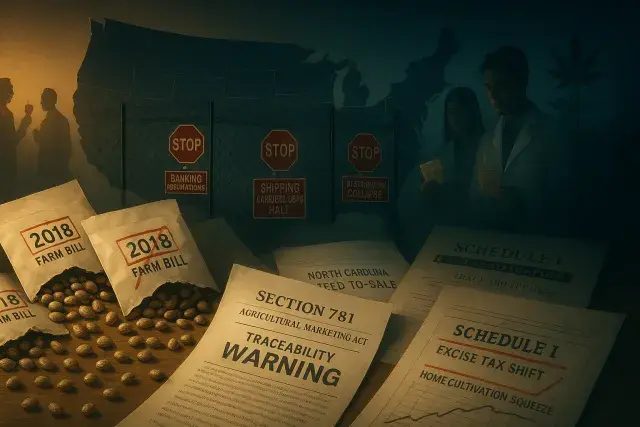
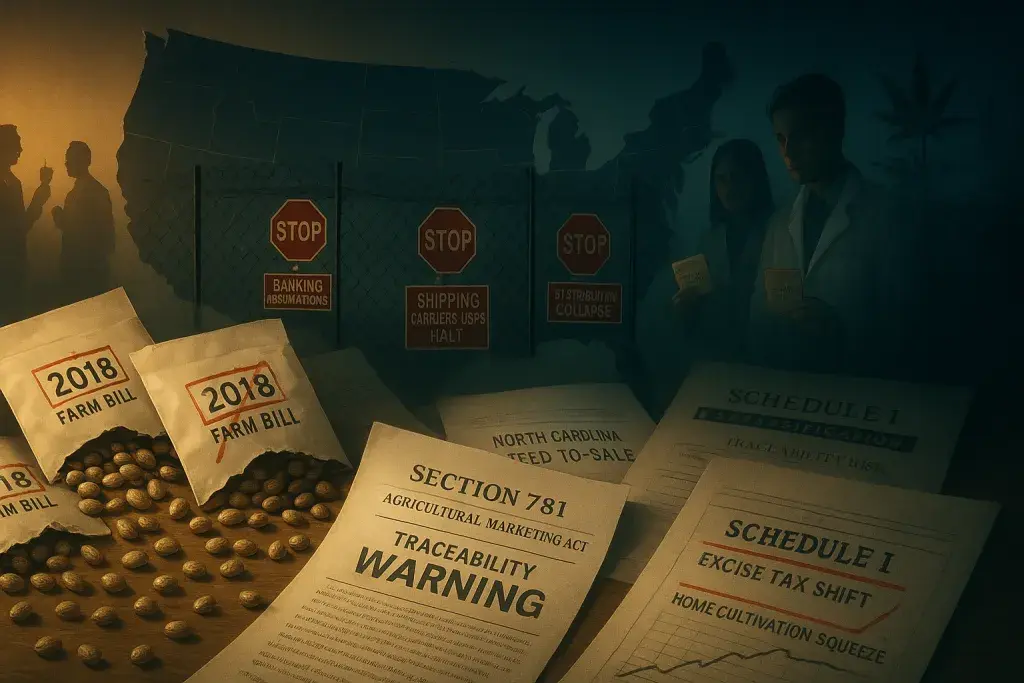
Here's the mechanism, and it matters for anyone touching plant genetics, not just breeders. The 2018 Farm Bill defined hemp broadly enough that seed companies could reasonably argue their inventory qualified as legal hemp under interstate commerce rules, since seeds carry negligible cannabinoid content on their own. Section 781 closes that gap by excluding "any viable seeds" from a parent plant that tests above the THC threshold, effectively reclassifying a huge share of cannabis genetics as Schedule I material. For multi-state operators already managing seed-to-sale tracking, COA documentation, and cultivation license compliance, this adds a new layer of traceability risk - one that touches everything from breeding records to point-of-sale inventory logs. Operators using platforms like North Carolina seed-to-sale dispensary software will need to watch closely how state-level compliance systems adjust to a federal seed classification that no longer matches how cultivation licensing has worked for years. North Carolina seed-to-sale dispensary software
The operational fallout goes well past breeders. Banking relationships for seed companies could dry up overnight, since federally insured institutions generally won't touch Schedule I-adjacent inventory. Shipping carriers, including USPS, would likely stop handling seed packages altogether. That's a distribution collapse, not a policy footnote. Wholesale genetics that dispensaries and cultivators rely on for crop diversity, pest resistance, and yield stability become harder to source legally, which tightens supply chains already strained by state-specific testing and packaging rules.
Why Genetic Diversity Is the Quiet Casualty
Landrace and heirloom cannabis genetics don't get replaced easily. Once a breeding line disappears from active commerce - because nobody can legally ship, sell, or bank around it - it tends to stay gone. That's a real concern for cultivators seeking resilience against pathogens or climate variability, and it narrows the genetic pool available to future medical and adult-use product development. A market that consolidates around a handful of patented, THC-capped genetic lines looks less like agricultural innovation and more like controlled access dressed up as compliance.
Who Benefits, Who Loses
Alcohol industry trade groups pushed hard for tighter restrictions on intoxicating hemp-derived products, and this provision reads as a byproduct of that lobbying effort. Meanwhile, large multi-state cannabis operators have poured resources into federal rescheduling efforts but have stayed largely quiet on seed classification. That silence is notable. If seed access tightens enough, home cultivation rights could follow, pushing more consumers toward licensed dispensary channels and excise-taxed products - a shift that would reshape retail demand even as it squeezes small breeders out of the supply chain.
What Operators Should Watch
- Whether banking and payment processors formally cut off seed and genetics companies ahead of the November 2026 deadline
- State-level responses, since some markets may attempt to preserve broader seed access independent of federal definitions
- Advocacy efforts from groups like the American Seed Innovation and Growth Alliance pushing for statutory revisions before implementation
- Downstream effects on wholesale genetics pricing and availability for licensed cultivators
None of this is settled yet, and the compliance landscape between now and next November will likely shift more than once. Dispensary operators, cultivators, and suppliers who depend on genetic diversity for crop resilience and product variety have real reason to track this closely - not as a distant policy debate, but as a supply chain risk with a hard deadline attached.