A Republican congressman from Ohio is pushing federal banking regulators to account for a problem that has persisted for over a decade: state-licensed marijuana businesses remain largely locked out of the conventional financial system because federal law still classifies cannabis as a Schedule I controlled substance. At a House Financial Services Committee hearing on Tuesday, Rep. Warren Davidson pressed Comptroller Jonathan Gould directly on whether banks are continuing to block customers engaged in activities that are legal under the laws of their respective states.
The Gap Between State Law and Federal Reality
The friction is structural. Nearly every state has legalized cannabis in some form - medical, recreational, or both - yet under the Controlled Substances Act, marijuana remains a Schedule I drug, placing it in the same federal category as heroin. Banks chartered under federal authority face a genuine compliance bind: serve a cannabis client and risk exposure to federal anti-money-laundering statutes, or turn them away and leave an entire licensed industry operating largely in cash.
Some financial institutions have been willing to take that risk, relying on Obama-era FinCEN guidance that established a framework for reporting cannabis-related accounts without triggering automatic enforcement action. That guidance doesn't legalize the activity - it just offers a paper trail as partial insulation. In practice, though, it has always been a workaround, not a solution. The businesses that can find a willing bank often pay elevated fees for the privilege, and many cannot find one at all.
Comptroller Gould offered a telling observation during the hearing. Asked by another lawmaker about fraud in banking, he noted that when he last worked at the Office of the Comptroller of the Currency five years ago, it was cannabis banking - not fraud - that dominated conversations with community bankers. That shift says something about how the problem has persisted without resolution rather than fading from relevance.
A Bill That Keeps Passing the House, Going Nowhere Else
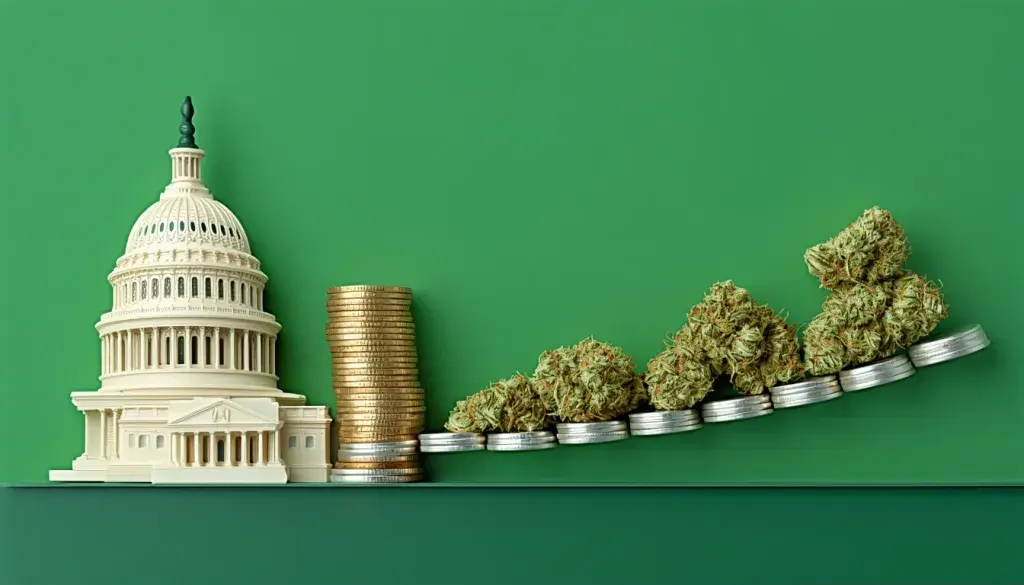
The legislative vehicle for fixing this is the Secure and Fair Enforcement Regulation Banking Act - SAFER Banking - which would protect financial institutions from federal penalties solely for servicing state-licensed cannabis businesses. The House has passed versions of this legislation seven times across recent sessions. Seven. And yet it has not become law.
The most recent attempt advanced out of committee in the Senate last Congress but never reached a floor vote. For the current session, the bill hasn't even been formally introduced in either chamber. Rep. Dave Joyce (R-OH), who is leading the House effort again, signaled in January that the filing was coming but not imminent. Sen. Bernie Moreno (R-OH), expected to carry it in the Senate, had projected a fall timeline - before a historically long government shutdown reshuffled the calendar.
The broader legislative environment isn't encouraging. Sen. Jeff Merkley, who has sponsored the bill in prior sessions, told Marijuana Moment that cannabis banking has been put "on the back burner." Rep. Lou Correa said he's "heard nothing" about a path forward. Even Rep. Andy Harris - one of the bill's most consistent opponents - acknowledged uncertainty about its status while holding firm to his position that federally illegal activity should stay out of federally regulated banking.
Rescheduling as a Possible Variable
One factor that could shift the calculus: a decision by the Trump administration to move cannabis from Schedule I to Schedule III of the Controlled Substances Act. Whether that would actually accelerate banking reform in Congress is, frankly, contested. Sen. Steve Daines, the bill's lead Republican sponsor in prior sessions, said he's not convinced rescheduling would meaningfully change how colleagues approach the financial services question - senators, he noted, tend to hold those opinions separately. Sen. Ron Wyden disagreed, arguing rescheduling would send a signal strong enough to move the broader policy debate. Moreno landed somewhere in the middle, calling it an "important domino."
What's striking here is the gap between the political consensus that seems to exist around the banking problem and the actual legislative output. A bipartisan coalition of 32 state and territory attorneys general recently called on Congress to act. The bill has passed the House repeatedly with support from both parties. Regulators are still fielding pointed questions about it at oversight hearings. And yet the bill sits unfiled, the industry sits unbanked, and cash-intensive cannabis dispensaries remain disproportionately exposed to the kinds of security risks that come with operating outside the financial mainstream.
Davidson's move to submit a formal question for the record may be procedurally modest. But it keeps the issue alive in a hearing environment - and in an oversight context - where it has every reason to be asked.