A drafting error embedded in Virginia's budget-based marijuana legalization legislation has left law enforcement, prosecutors, and compliance professionals scrambling to determine which cannabis penalties are actually in force-and which may have been inadvertently repealed when the budget took effect July 1. The dispute is not academic. It touches directly on whether distributing cannabis to minors and large-scale unlicensed distribution can be prosecuted under state law right now, more than a year before Virginia's regulated adult-use market is even scheduled to open.
The broader compliance picture here matters well beyond Virginia's borders. States across the country that have built out structured regulatory systems-with point-of-sale age verification, seed-to-sale tracking, and licensing prerequisites-have learned, sometimes the hard way, that the period between legalization passage and market launch is operationally and legally precarious. Operators in adjacent markets tracking Virginia's rollout, or vendors assessing whether to enter the state, should note that comparable gaps in statutory clarity have caused real enforcement disruption elsewhere. Providers of Rhode Island seed-to-sale dispensary software, for example, understand how critical clean statutory timelines are to building compliant operational infrastructure-a lesson Virginia is absorbing in real time.
The core problem is structural. The budget legislation Virginia enacted repealed existing criminal statutes governing distribution and possession with intent to distribute, as well as underage possession-but did so without clearly specifying when those repeals take effect relative to the new regulatory framework, which doesn't launch until July 1, 2027. That created what one commonwealth's attorney described bluntly as "a word problem"-and word problems, as Nate Green of Williamsburg-James City County put it, go against prosecutors. "If it's unclear, we lose," he said. Green suggested a special session may be required to close the gap.
Law Enforcement Caught Between Conflicting Signals
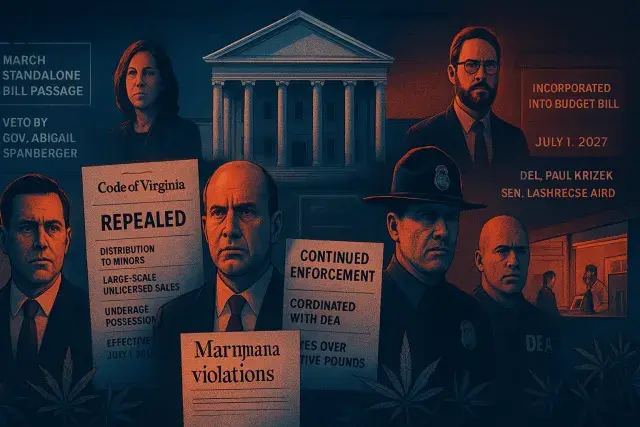
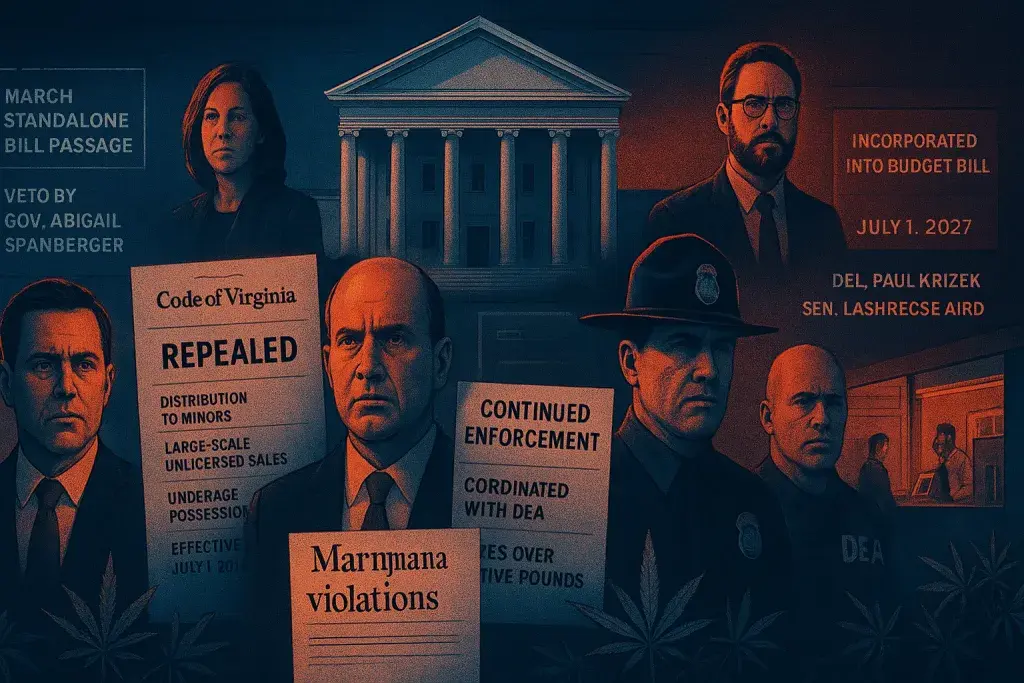
The confusion reached operational flashpoint this week when a Virginia State Police lieutenant sent an internal email to colleagues stating that "as of July 1, 2026, there are no Code of Virginia violations related to marijuana," and instructing that enforcement actions taken since the month began be reported up the chain. The message, first reported by Virginia Scope, also noted that federal DEA coordination remained an option for cases involving more than five pounds.
State Police Superintendent Jeffrey Katz subsequently posted publicly that the agency would "continue to enforce existing laws, in line with the code of Virginia"-a direct contradiction of the internal directive, at least in tone. That kind of public-private split within a single agency is a compliance nightmare in any regulated market. For cannabis specifically, where enforcement posture shapes how operators structure their programs, what signage they post, and how aggressively POS systems flag age-verification failures, institutional ambiguity at the law enforcement level has downstream effects on retail operations.
The Virginia Code Commission moved Wednesday to address the situation administratively, updating the state's statutory website to indicate that existing penalties remain in effect until July 1, 2027. Del. Marcus Simon, who chairs the Commission, characterized the edit as correction of "an obvious error" that would have produced "an absurd result" if applied as written. Whether that administrative fix carries legal weight sufficient to support a criminal prosecution is a different question-one prosecutors and defense attorneys will likely test.
The Political and Regulatory Timeline That Got Virginia Here
To understand how a significant cannabis reform ended up with this kind of drafting exposure, the timeline matters. Lawmakers passed standalone legalization legislation in March. Gov. Abigail Spanberger vetoed it in May after the legislature declined her proposed amendments-including a delayed sales launch date, a higher excise tax, and stiffer criminal penalties for public consumption. After that veto, Spanberger negotiated a compromise with the bill's lead sponsors, Del. Paul Krizek and Sen. Lashrecse Aird, and the revised terms were incorporated into the state budget rather than a standalone bill.
Legislating cannabis policy through a budget bill is not unusual-states have done it-but it carries specific technical risk. Budget vehicles move fast, involve enormous amounts of unrelated statutory language, and receive less granular committee scrutiny on any single provision than a standalone bill might. The enactment clause language that determines when individual provisions of a bill take effect is also easy to get wrong when the underlying policy is complex and the timeline involves multiple staggered dates. Here, the mismatch between the repeal of old penalties and the activation of the new regulatory regime left a roughly one-year window with potentially no applicable state law on distribution or underage access.
The compromise deal itself contains significant structural terms: recreational sales begin July 1, 2027; the public possession limit rises to 2 ounces; public consumption carries a $250 civil penalty; and the marijuana excise tax increases from 6 percent to 8 percent after two years of legal sales. Those are the terms the industry will eventually operate under. The problem is that reaching that operational stage without resolving the current statutory ambiguity creates exactly the kind of legal uncertainty that makes licensed operators, investors, and compliance vendors hesitant to commit resources to the market.
What This Means for Operators and Compliance Infrastructure
Virginia currently has medical cannabis dispensaries operating under license. Those operators are watching this situation closely-not because their licenses are in immediate jeopardy, but because the regulatory environment in which they'll eventually compete for adult-use customers is being built on a foundation that's currently contested. Vendors building out POS systems, inventory management platforms, and compliance software for the Virginia market need to know which statutory provisions are active, which penalties attach to specific transactions, and what the enforcement posture of local and state authorities will be when the adult-use market eventually opens.
Age verification is the most immediate operational concern. Dispensaries in every regulated market are required to verify purchaser age at the point of sale-both through ID check protocols and through POS-level controls that prevent transactions below the legal threshold. If the statutory prohibition on underage possession has genuinely lapsed-which sponsors vigorously deny, but which at least some prosecutors believe is an open question-that creates compliance ambiguity around how violations would be adjudicated. Licensed operators generally don't wait for legal clarity before enforcing internal compliance policies; the reputational and licensing risk alone is sufficient incentive. But the uncertainty still matters for how operators document their compliance posture.
The most likely resolution is a special session or emergency legislation that corrects the enactment clause language explicitly-restoring unambiguous statutory support for the penalties that sponsors insist were never meant to lapse. Until that happens, Virginia's licensed cannabis sector is operating in a state where the law's text and its legislators' stated intent are in measurable tension. That's not a comfortable position for any compliance-driven business, and it's the kind of drafting failure the industry will be citing as a case study for years.