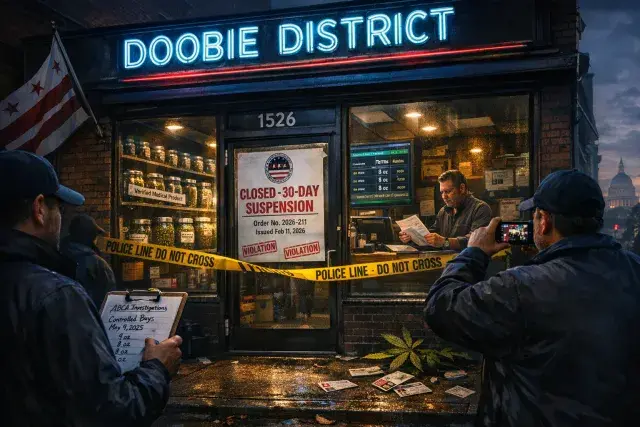
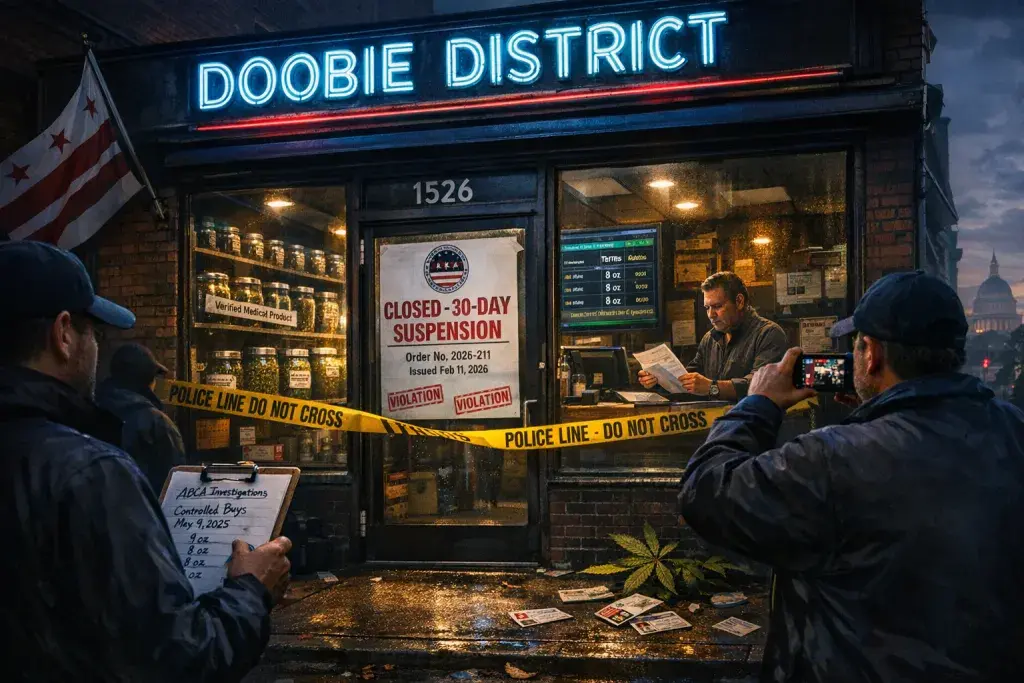
The District of Columbia Alcoholic Beverage and Cannabis Board has ordered a 30-day suspension for KLM, LLC, trading as Doobie District on U Street, after uncovering sales of medical cannabis to unqualified buyers and falsified entries in the state's METRC tracking system. Issued February 11, 2026, in Order No. 2026-211, the ruling highlights the ongoing challenges in maintaining integrity within DC's medical cannabis program, where patient verification is essential to safeguard therapeutic access and curb diversion to unregulated markets.
Undercover Probe Reveals Compliance Failures
An ABCA investigation launched May 9, 2025, followed tips about unauthorized medical cannabis sales at the 1526 U Street, NW, location. Undercover agents made two controlled purchases of verified medical product without showing patient cards or caregiver credentials. Staff completed transactions unchecked, printing labels with a Doobie District employee's name and ID number instead of the buyers' details.
Further scrutiny exposed deeper issues: the employee's METRC account showed purchases exceeding DC's 8-ounce, 30-day patient limit, with two other accounts similarly oversold using the same credentials. This pattern points to systemic lapses in verification protocols, potentially driven by high demand or inadequate staff training in a rapidly evolving cannabis retail environment.
Sustained Charges and Regulatory Context
The Board upheld two core violations:
- Dispensing medical cannabis to non-qualified patients or caregivers, breaching 22-C DCMR § 5709.5.
- Entering false data into METRC, violating 22-C DCMR § 5615.3, which mandates accurate, real-time tracking from seed to sale.
METRC, DC's compliance backbone, ensures product traceability to prevent black-market leakage—a critical tool as medical cannabis serves patients managing chronic pain, epilepsy, and other conditions. Such infractions erode trust in the program, mirroring national trends where lax oversight has fueled recreational diversion amid partial legalization in 24 states plus DC.
Remedial Steps and Enforcement Outlook
Doobie District owner Peter Murillo stipulated to the facts, terminated implicated staff, retrained employees, and introduced personal oversight of sales volumes. Despite these efforts, the Board stressed licensee accountability for supervision, opting against revocation but imposing the suspension plus mandatory ABCA-approved training within 60 days.
This measured penalty balances deterrence with rehabilitation, reflecting DC's maturing regulatory framework. Non-compliance risks reimposed closures, signaling to the industry that patient safety trumps profits.
Broader Stakes for Public Health and Access
Incidents like this underscore the tension between expanding cannabis access and rigorous gatekeeping for medical users. With DC's program limiting purchases to registered patients, violations not only invite penalties but also heighten risks of unsafe consumption by unprepared individuals, potentially exacerbating health issues like impaired driving or adolescent exposure. As legalization advances, robust enforcement protects legitimate patients while curbing societal costs estimated at billions nationally in diversion-related enforcement. Doobie District's case serves as a cautionary benchmark for compliance in an industry projected to hit $50 billion in U.S. sales by 2026.