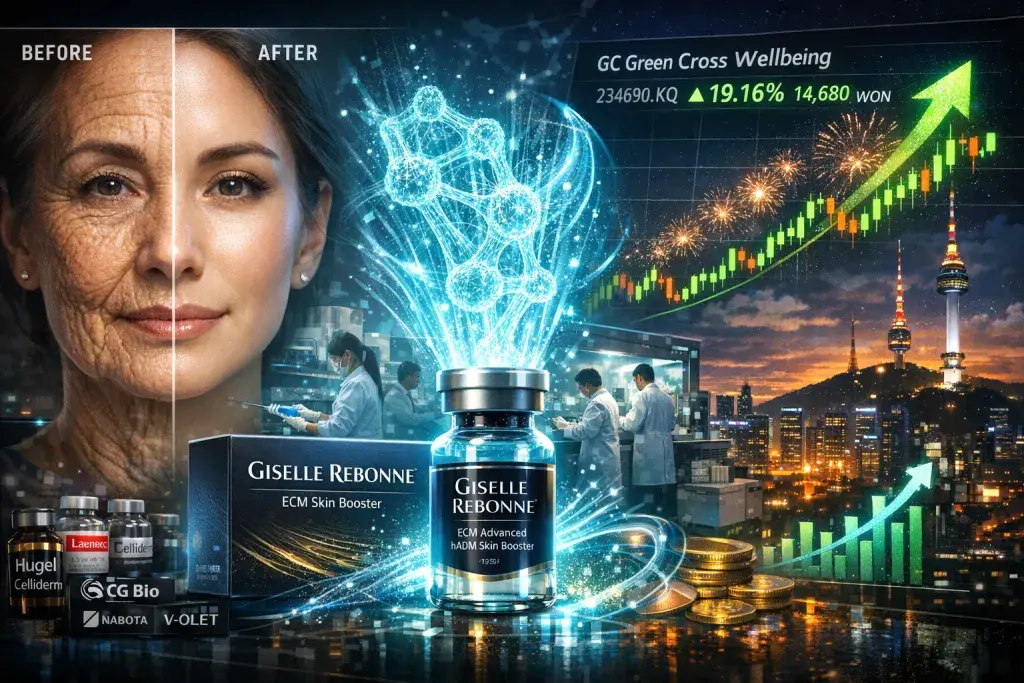
On October 25th, shares of GC Green Cross Wellbeing (234690.KQ) rocketed 19.16% to close at 14,680 won, fueled by the company's announcement of launching "Giselle Rebonne," a cutting-edge extracellular matrix (ECM) skin booster. This move signals a pivotal advancement in regenerative aesthetics, tapping into surging demand for natural, tissue-mimicking skin rejuvenation therapies.
Unpacking Giselle Rebonne's Innovative Edge
Giselle Rebonne stands out as a human acellular dermal matrix (hADM)-based ECM skin booster, derived from meticulously processed human tissue. Unlike traditional skin boosters that indirectly prompt collagen production, this product delivers the ECM scaffold directly to the skin, fostering true structural regeneration and long-term tissue remodeling.
- Proprietary decellularization by MS Bio removes cells and immunogenic factors, boosting biocompatibility and slashing risks of rejection or inflammation.
- GC Green Cross Wellbeing oversees raw material supply via its Eumseong tissue bank, ensuring stringent quality control.
- Positioned as a "next-generation" booster, it addresses core skin aging by rebuilding the extracellular matrix foundation.
Strategic Portfolio Expansion in a Competitive Landscape
This launch bolsters GC Green Cross Wellbeing's aesthetic lineup, now encompassing placenta-based "Laennec" injections, dermal fillers, skin boosters, and botulinum toxin "Innovo." The strategy mirrors industry peers: Hugel partners with Hans Biomed for "Cellrderm" ECM promotion, while CG Bio eyes bundled sales with Daewoong's "Nabota" and "V-Olet."
South Korea's dominance in aesthetic medicine—fueled by K-beauty trends and advanced biotech—drives this ECM wave. Global demand for minimally invasive anti-aging solutions is exploding, with the skin booster market projected to grow amid preferences for biocompatible, regenerative options over synthetic fillers.
Implications for Regenerative Dermatology
Beyond stock gains, Giselle Rebonne underscores a paradigm shift toward bioengineered therapies that mimic the body's native architecture. In an era where consumers prioritize safety and efficacy, hADM products minimize downtime and adverse events, aligning with holistic wellness movements.
Challenges remain, including regulatory hurdles for human-derived materials and scalability, but successes like this could accelerate ECM adoption worldwide. For investors and practitioners, it highlights Korea's biotech prowess, potentially reshaping global standards in skin health and longevity-focused aesthetics.