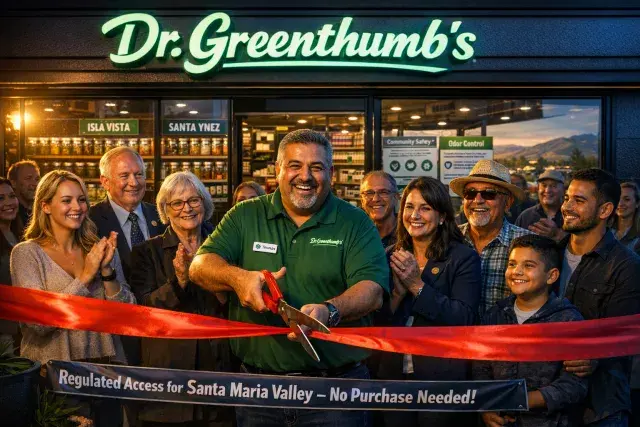
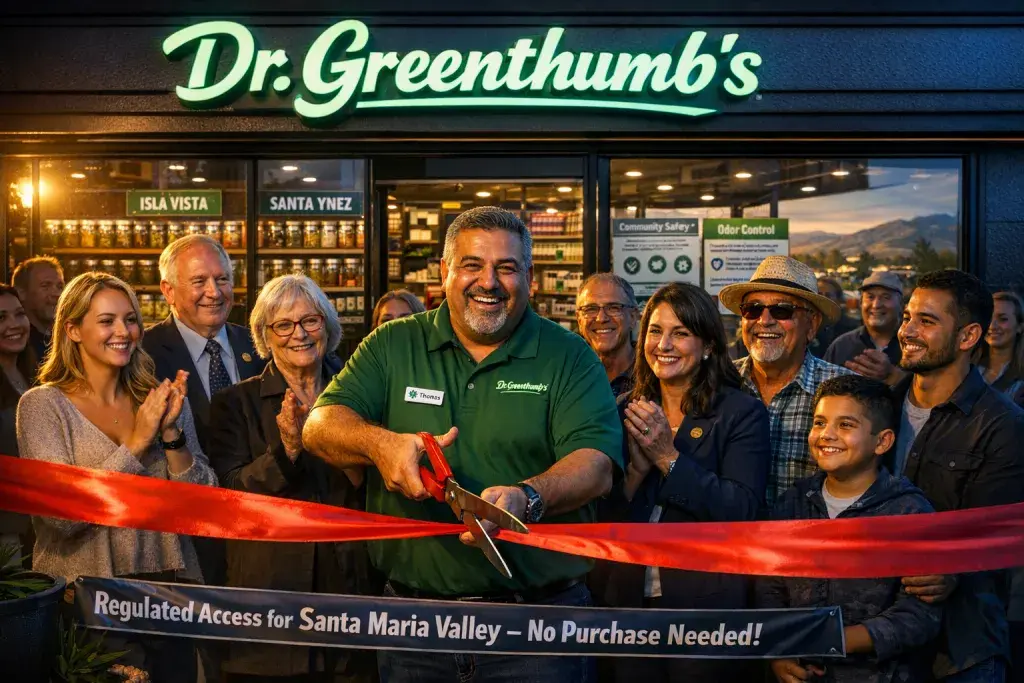
Dr. Greenthumb’s cannabis dispensary swung open its doors on December 7 at 1604 East Clark Avenue in Orcutt, marking the third of six county-approved storefronts in unincorporated Santa Barbara County to launch. This expansion brings regulated cannabis access closer to Santa Maria Valley residents, reflecting a careful balance between local demand and community safeguards amid growing normalization of cannabis retail.
Rigorous County Process Shapes Dispensary Landscape
Santa Barbara County caps storefront licenses at six across specific unincorporated areas—Eastern Goleta Valley, Isla Vista, Los Alamos, Orcutt, Santa Ynez, and Toro Canyon/Summerland—to prevent overconcentration. Currently, Isla Vista, Orcutt, and Santa Ynez operate, while others advance through permitting.
The approval hinges on Chapter 50, Section 50-7(b) of county regulations. Two months before applications, public meetings gathered community input to set priorities. Applicants must score 85% or higher, with rankings weighted 10% on business proposals and 90% on neighborhood compatibility plans that include:
- Customer and community education plans
- Neighborhood design and odor control
- Parking and community involvement strategies
Dr. Greenthumb’s topped Orcutt’s rankings, securing land use permits, business licenses, and state DCC licensure seamlessly.
Consumer-Centric Model Promotes Safety and Education
General manager Thomas Casarez highlights the dispensary’s “grocery store model,” stocking diverse products from sleep aids to pain relievers, with staff guidance. All California cannabis undergoes third-party testing for contaminants and pesticides, ensuring consumer safety—a critical shift from black-market risks.
Casarez invites skeptics: “Come on in, no purchase needed.” Positive feedback from Santa Maria locals underscores convenience over distant options like Guadalupe’s Root One, the Valley’s first in mid-October.
Implications for Health Access and Cultural Shift
This rollout signals cannabis’s evolution from stigma to regulated lifestyle staple, aligning with national trends where legal markets prioritize health outcomes. In rural areas like Orcutt, proximity reduces unsafe travel and supports evidence-based uses for chronic pain, insomnia, and anxiety, backed by studies showing lower opioid reliance in legalized states.
By mandating community integration, the county fosters sustainable growth, potentially modeling equitable access nationwide as public health experts advocate for education over prohibition.