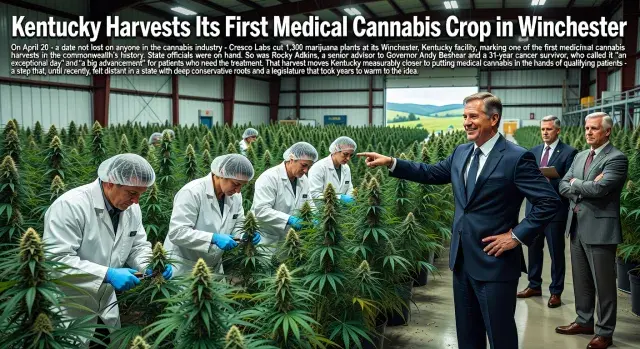
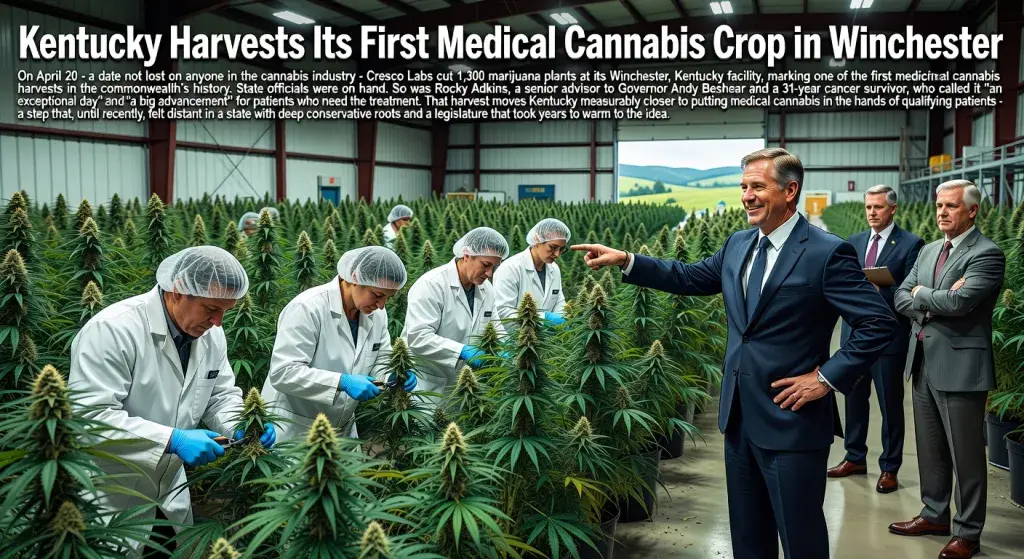
On April 20 - a date not lost on anyone in the cannabis industry - Cresco Labs cut 1,300 marijuana plants at its Winchester, Kentucky facility, marking one of the first medical cannabis harvests in the commonwealth's history. State officials were on hand. So was Rocky Adkins, a senior advisor to Governor Andy Beshear and a 31-year cancer survivor, who called it "an exceptional day" and "a big advancement" for patients who need the treatment.
That harvest moves Kentucky measurably closer to putting medical cannabis in the hands of qualifying patients - a step that, until recently, felt distant in a state with deep conservative roots and a legislature that took years to warm to the idea.
What's Growing Inside the Facility
The Winchester building is climate-controlled and houses thousands of plants across 15 distinct strains, each bred for specific therapeutic purposes. Francis Sweeny, Cresco's director of technical cultivation, described the plant's full growth cycle as 15 to 17 weeks from start to harvest-ready.
A few strains hint at the range of medical applications the company is targeting:
- Indigo - a sleep aid designed to address stress and promote relaxation.
- Billy Ocean - a cone-topped strain intended to stimulate appetite and energy, effects Sweeny compared to what steroids can provide.
- Pineapple Breeze - bred for pain relief, stress reduction, and sleep support.
All plants in the facility are clones - genetically identical cuttings taken from mother plants. Those mothers, Sweeny noted, have already produced the next crop. This isn't a one-off harvest; it's a pipeline. The cloning approach ensures consistency in cannabinoid profiles, which matters enormously for medical use. Patients and physicians need predictable dosing, and genetic uniformity is how cultivators deliver it.
"The more we can share that knowledge of how this plant relates to our lives the closer we are going to become to it," Sweeny said - a remark that sounds philosophical but carries a practical edge. Public understanding of strain-specific effects remains thin, even in states with mature cannabis programs.
Kentucky's Long Road to This Moment
Kentucky was not early to medical cannabis. The commonwealth legalized it only after years of legislative debate, well behind states like Colorado, Oregon, and even neighboring Illinois. For a state whose agricultural identity was long defined by tobacco and bourbon, the shift carries cultural weight.
Adkins' presence at the harvest was deliberate. A three-decade cancer survivor and longtime state legislator before joining the governor's office, he embodies the kind of credibility that medical cannabis advocates need in Frankfort. His endorsement isn't abstract - it's personal.
Still, the program is young. Infrastructure is being built in real time. Cultivation is underway, but the chain from harvest to dispensary to patient involves processing, testing, packaging, and regulatory sign-off at each step. The 1,300 plants cut on Monday won't reach patients tomorrow. They represent a beginning, not an arrival.
Will Recreational Follow?
Here's the question that shadows every medical cannabis rollout: does this open the door to recreational use? Adkins was candid but cautious. He said it's hard to predict whether Kentucky will go recreational anytime soon. Members of the General Assembly, he noted, will treat the medical program as something of a test - watching how it performs before considering any broader legalization.
That's a familiar pattern. Most states that have moved to adult-use cannabis did so after operating medical programs for years, sometimes a decade or more. The political logic is straightforward: let the medical program demonstrate that regulation works, that tax revenue flows, that public safety concerns don't materialize at the scale critics feared. Then - maybe - expand.
But Kentucky's legislature remains conservative on the issue, and Adkins acknowledged it will take sustained educational efforts to move lawmakers toward comfort with recreational legalization. Translation: don't hold your breath. The medical program itself is the political product right now, and its success or failure will shape every conversation that follows.
For patients in the commonwealth who have waited years for legal access to cannabis-based treatment, though, Monday's harvest was the thing that mattered. Not what comes next. What finally arrived.