
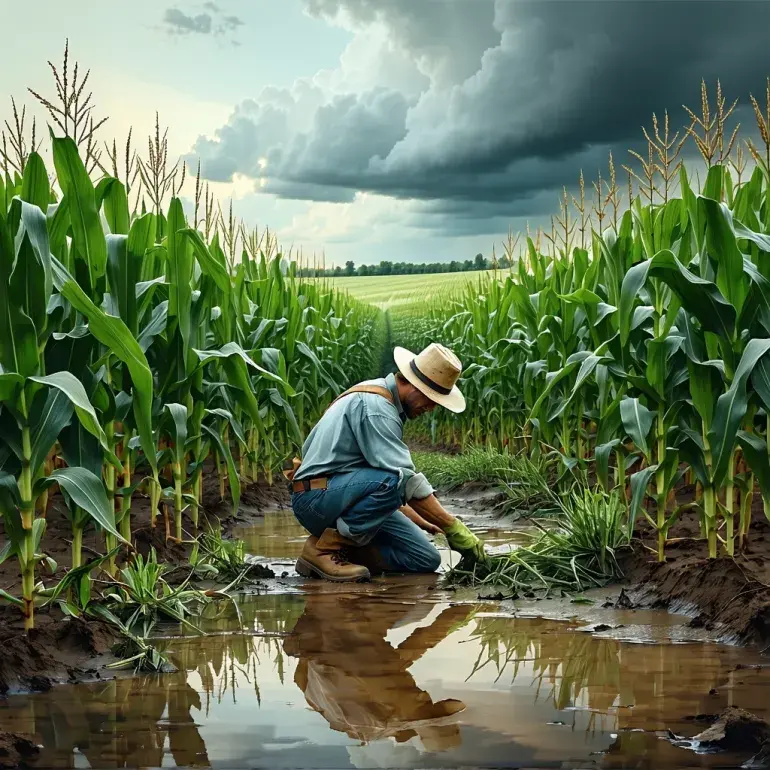
In the Midwest's unusually wet summer of 2025, high July rainfall boosted corn yields in spots but raised alarms for stalk rots and weakening as harvest nears. Farmers delaying harvest to cut drying costs risk lodging and combine damage if stalks fail—early brace root checks offer a simple fix to prioritize fields.
Stalk Threats from Wet Weather and Stress
Saturation fosters diseases like gibberella, diplodia, fusarium, and anthracnose, which erode stalk interiors. Abiotic factors, such as nutrient or moisture shortages during grain fill, trigger cannibalization: plants sacrifice stalk strength to feed kernels, turning solid white pith to straw-like weakness. Winds then topple crops, slashing yields by 10-20% in severe cases amid rising climate-driven wet spells.
Brace Roots as First Alarm
Before push tests reveal trouble, brace roots flag issues. These anchors, vital for stability and late-season uptake, blanch, crease lengthwise, and collapse under pressure when stress hits. Healthy ones stay green, smooth, and firm—get on your knees in fields now to survey.
- Blanched color signals nutrient pullback.
- Lengthwise creases indicate drying internals.
- Easy collapse predicts stalk failure.
Validate with Push Test and Plan Ahead
Purdue's Dan Quinn advises the push test: tilt 100 consecutive stalks; those not rebounding show rot risk percentage. For next year, counter with balanced nutrition, disease-resistant hybrids boasting strong stay-green and lodging scores, drought-tolerant picks matched to fields, and fungicides to sustain photosynthesis amid erratic weather.
Harvest Smarts and Long-Term Resilience
Spotting brace root woes lets you combine vulnerable fields first, dodging downed corn headaches. As variable rains intensify, proactive scouting builds resilient operations, safeguarding yields when abiotic and biotic pressures collide.