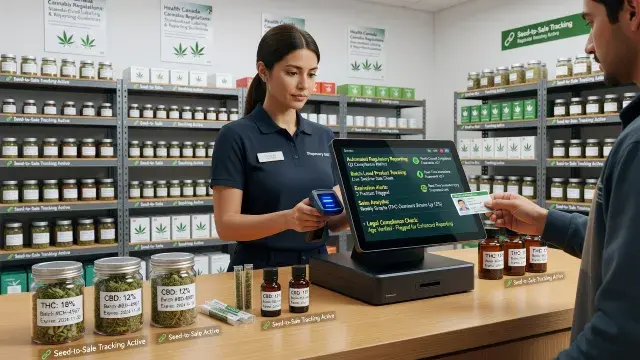
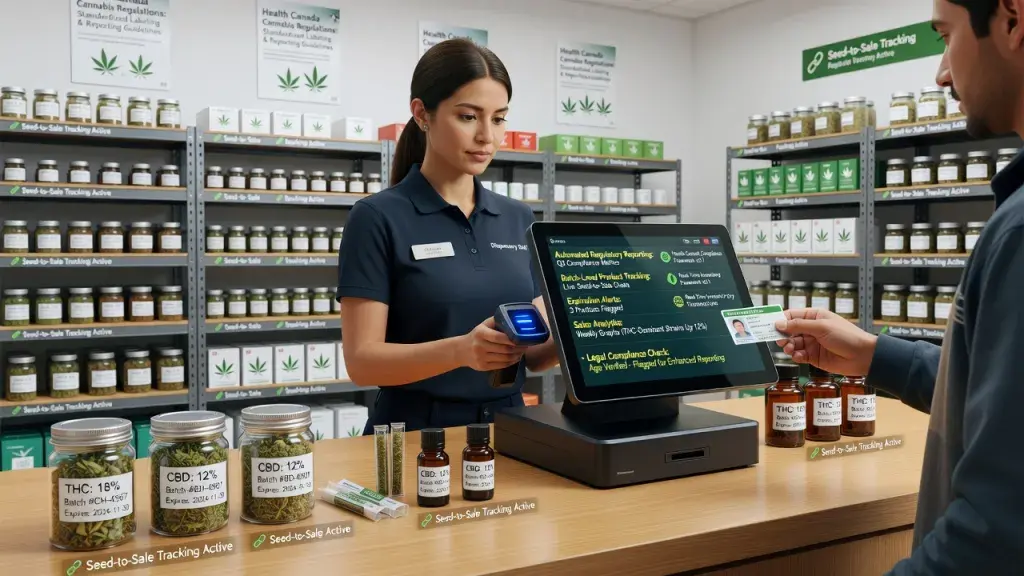
Cannabis retailers operate under a compliance burden that grocery stores and pharmacies simply don't face. Every sale, every gram, every customer age check has to be documented in a way that satisfies regulators, and a generic point-of-sale terminal built for a coffee shop won't cut it. That's why cannabis-specific POS systems have become a standard fixture behind the counter rather than a luxury upgrade.
Why Generic Retail Software Falls Short
A standard POS platform handles transactions. A cannabis POS system has to do that and also talk to seed-to-sale tracking infrastructure, verify a customer's age at the register, flag products nearing expiration and generate the sales records regulators expect to see during an audit. In practice, though, the gap between "processes payments" and "keeps a dispensary compliant" is where most of the real engineering work happens. Operators who try to bolt compliance tools onto a generic system often end up with workarounds that don't hold up when an inspector asks for records.
The core job of these systems is straightforward to describe and harder to execute: real-time inventory visibility, automated regulatory reporting, and a checkout experience that doesn't leave customers fumbling at the counter. Budroom inventory has to match what's logged in compliance software down to the unit, and any mismatch is a red flag waiting to happen.
What a Compliant System Actually Tracks
Traceability is the backbone of cannabis retail compliance. Products move from cultivator to processor to dispensary shelf, and each step needs a paper trail. A well-built POS system supports that chain with a few specific functions:
- Automated sales, tax and inventory reporting that reduces manual entry errors ahead of an audit
- ID scanning at the point of sale to confirm legal age before a transaction completes
- Batch-level product tracking so a recall or quality issue can be traced back to its source
- Compliant label generation showing THC content, batch numbers and expiration information
None of this replaces a dispensary's own compliance staff or legal counsel - the software supports the process, it doesn't own the liability. Operators still need to understand their provincial or state requirements and confirm the system is configured to match them, not just assume the default settings are correct.
Inventory Discipline as a Business Necessity
Inventory shrinkage and expired product are quiet profit killers in cannabis retail, and they carry compliance risk on top of the financial hit. Real-time tracking lets a store manager see stock levels as products sell, which supports automated reordering and cuts down on both empty shelves and dead stock sitting past its shelf life. Expiration alerts matter here in a way they don't for most retail categories - selling a product past safe shelf life isn't just bad business, it's a regulatory violation waiting to be flagged.
The Operational Payoff
Beyond the compliance function, these systems change how a dispensary runs day to day. Sales analytics give owners a clearer read on which products move and which sit, informing wholesale purchasing and promotional decisions. Loyalty and CRM tools support customer retention without requiring a separate marketing platform. Multi-store operators get a centralized view across locations, which matters more as the industry consolidates and single-location shops give way to small chains.
For Canadian operators, integration with Health Canada's regulatory framework adds another layer of assurance - one less system to reconcile against federal reporting requirements. Whatever the jurisdiction, the underlying principle holds: a POS system built for cannabis retail isn't a convenience feature. It's infrastructure for staying licensed.