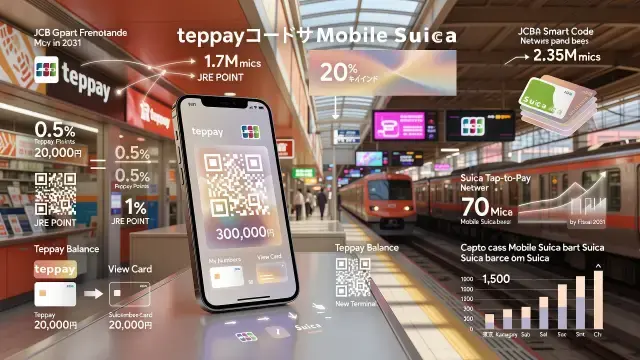
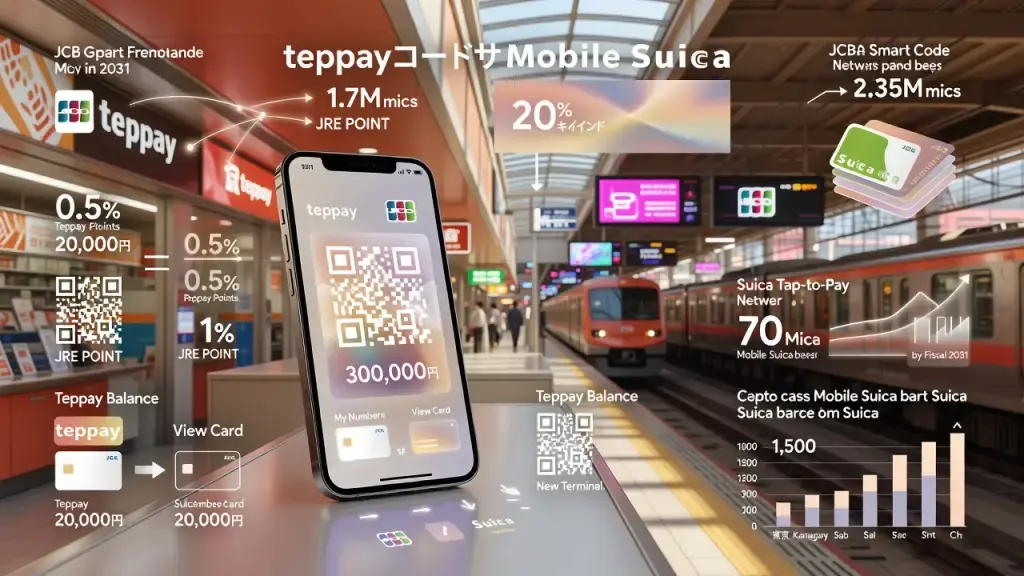
East Japan Railway Company began phasing in its new teppay code payment service inside the Mobile Suica app on Oct. 20, rolling out access from 11 a.m. Japan time. The move pushes Suica well past its original job as a transit fare card, letting identity-verified users spend up to ¥300,000 - fifteen times the ¥20,000 ceiling on a standard Suica balance.
A Second Balance, Built on Trust Verification
Here's the mechanism: teppay runs as a separate balance from Suica, not a raised limit on it. To unlock the higher ceiling, users verify identity with a My Number card, Japan's national ID system. Link a View Card credit card on top of that, and the spending cap stretches to the card's own credit limit, removing the need to pre-load funds at all. Fares still come out of the capped ¥20,000 Suica balance - that boundary hasn't moved. Money can flow from teppay into Suica, but not the other way, and teppay funds can't be cashed out or withdrawn to a bank account. It's a one-directional plumbing system, by design.
No New App, No New Terminal
JR East added teppay automatically to the roughly 45 million existing Mobile Suica accounts, asking only that users accept updated terms before first use. That's a meaningful distribution advantage over a payment product launched from zero. On the merchant side, there's no hardware mandate: stores can simply display a QR code for customers to scan rather than installing new point-of-sale terminals. Merchants that register for that scan-based option by March 31, 2027 get a fee waiver for up to 12 months - a clear push to seed acceptance quickly before charging for it.
Where It Works, and Where It Doesn't - Yet
Acceptance splits into layers that matter for anyone tracking Japan's payments fragmentation:
- JR East group shops and stores carrying the teppay mark
- More than 1.7 million locations on JCB's Smart Code network, as of the end of March 2026
- Online JCB merchants, via an in-app teppay prepaid card
- Suica's separate tap-to-pay network, about 2.35 million stores as of the end of August 2026 - a footprint JR East says remains distinct from teppay's
That last point is worth sitting with. Two payment rails from the same company, overlapping in places but not identical, is the kind of structure that sounds tidy in a press briefing and slightly confusing at checkout. Point rewards reinforce the split too: teppay balance payments earn 0.5% in teppay points, View Card-linked payments earn 1% in JRE POINT, and some merchants award nothing at all.
Reading the Survey Behind the Rollout
JR East tied the launch to its own survey of 1,500 people across Tokyo, Kanagawa, Saitama and Chiba, conducted Oct. 17-20, 2025. About 90% reported fatigue from juggling too many cashless payment methods, and 76.1% said they'd rather not scatter spending across apps. Among those willing to consolidate, 77.5% preferred sticking with a brand they already trust - and 84.3% of the sample already carried Suica or PASMO. That's the business logic in plain terms: rather than compete with a new wallet, JR East is betting commuters will consolidate around the card already in their pocket.
What Comes Next
PASMO Co., which operates the rival transit card used by private rail and bus operators, plans to bring teppay into Mobile PASMO by spring 2027, with cross-app transfers to follow. JR East is also weighing automatic top-ups. Promotional spending starts soon too - national TV ads from Nov. 2, and a 20% points-back campaign from Nov. 4 through Dec. 25 for code payments of ¥500 or more, capped at 5,000 points per user. The company has set a target of 70 million Mobile Suica cards by fiscal 2031, with a next-generation Suica app due in fiscal 2028. Whether teppay actually reduces payment fatigue, or just adds one more balance for commuters to track, will depend on how cleanly JR East manages that dual-network structure over the next few years.