Texas voters head to the polls this November carrying the usual list of concerns - property taxes, the cost of living, public safety. But for a slice of the electorate tied to the state's hemp industry, there's another question on the ballot, even if it's not printed anywhere: will the candidates they elect let a regulated marketplace keep operating, or push policies that shut it down?
That's not a small constituency. Farmers, manufacturers, retailers, lab technicians and retail employees all have money and jobs riding on how this plays out. And the politics here don't sort neatly into red and blue columns, which is part of what makes the issue tricky for candidates trying to read the room.
A Policy Fight That Crosses Party Lines
Hemp regulation in Texas traces back to the 2018 Farm Bill, which opened the door to hemp-derived products nationally and prompted states to build their own compliance frameworks - licensing, lab testing, certificates of analysis, labeling standards, the works. Texas businesses built on that foundation. They invested in compliant packaging, testing protocols and inventory systems designed to meet state requirements, not skirt them.
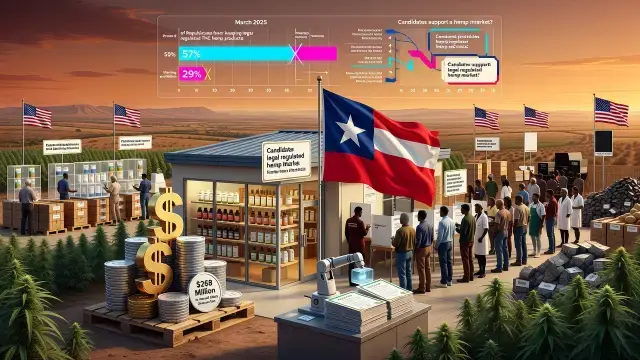
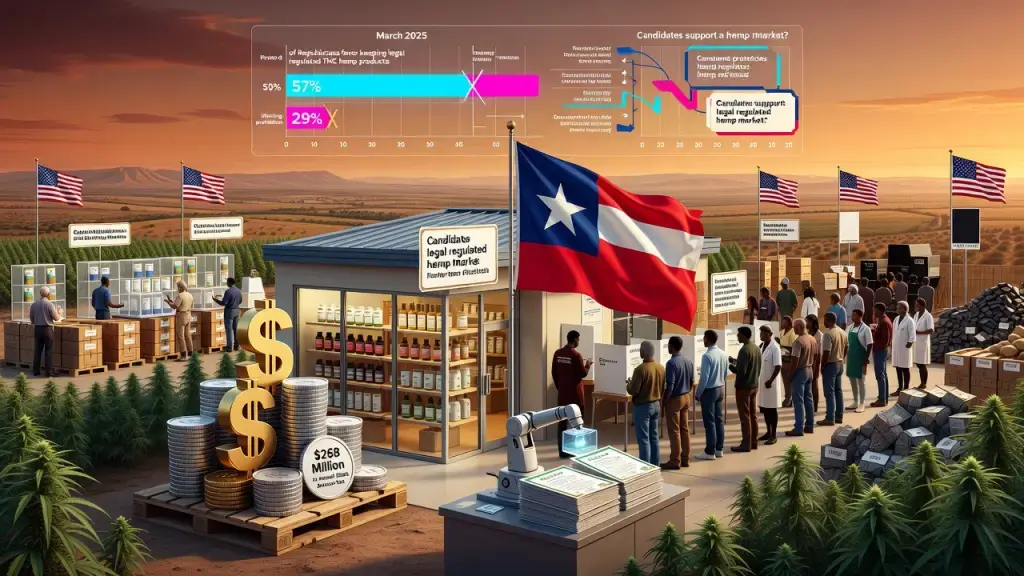
What's striking is that prohibition isn't the consensus position voters might assume. A March 2025 statewide poll found 57% of Republican voters favored keeping legal THC hemp products available under regulation, versus 29% who wanted prohibition. That's a meaningful gap, and it suggests lawmakers pushing for a ban may be out of step with the people who elected them. Fair enough to debate how hemp should be regulated. It's a different thing entirely to assume voters want it gone.
What's Actually at Stake for Operators and Consumers
The economic exposure is real. Industry estimates put the Texas hemp market at roughly $10 billion, generating an estimated $268 million in annual state sales-tax revenue. Behind those figures are supply chains, wholesale menus, retail storefronts and compliance staff - the ordinary infrastructure of a regulated industry, not a gray-market operation.
Eliminating that framework doesn't make demand disappear. In practice, consumers who lose access to tested, labeled products from licensed retailers tend to look elsewhere. That includes veterans and seniors who have come to rely on hemp-derived products sold through legal channels. Illicit markets don't run lab tests. They don't issue COAs. They don't answer to state regulators. If consumer protection is the stated goal, a ban that pushes buyers toward unregulated sources works against it, not for it.
Where the Evidence Debate Stands
During a state Senate hearing this year, health officials presented claims about hemp-derived product risks that, measured against the state's own data, gave a skewed picture of actual public health impact. Those claims have continued to shape the policy conversation regardless. That's a problem. Decisions that could eliminate a licensed industry and its tax base ought to rest on accurate evidence, not distorted framing of isolated incidents.
What Voters and Candidates Should Be Asking
The question industry stakeholders want answered is plain: does this candidate support a legal, regulated hemp market in Texas, or policies that would dismantle it? Regulation and consumer protection aren't opposing goals - they can coexist, but only through clear rules, consistent enforcement and lab-tested standards, not blanket prohibition dressed up as public safety.
- Licensed hemp businesses operate under testing, labeling and compliance requirements established since 2018
- An estimated $268 million in annual state sales-tax revenue is tied to the current legal framework
- Prohibition tends to shift demand toward unregulated markets with no testing or labeling oversight
- Voter sentiment, including among Republicans, leans toward regulation over elimination
A ban is not a substitute for sound policy. For the Texans whose jobs, businesses and access to regulated products depend on the outcome, that distinction is the whole election.